
The History of the Doberman
Read more about the begginings of our beloved breed, its making and most important moments.
HISTORY
Doberman Pinscher
This is a breed of working dog developed in Apolda, Germany, by Karl Friedrich Louis Dobermann, a tax collector, night watchman, dog catcher, and keeper of a dog pound, about 1890.
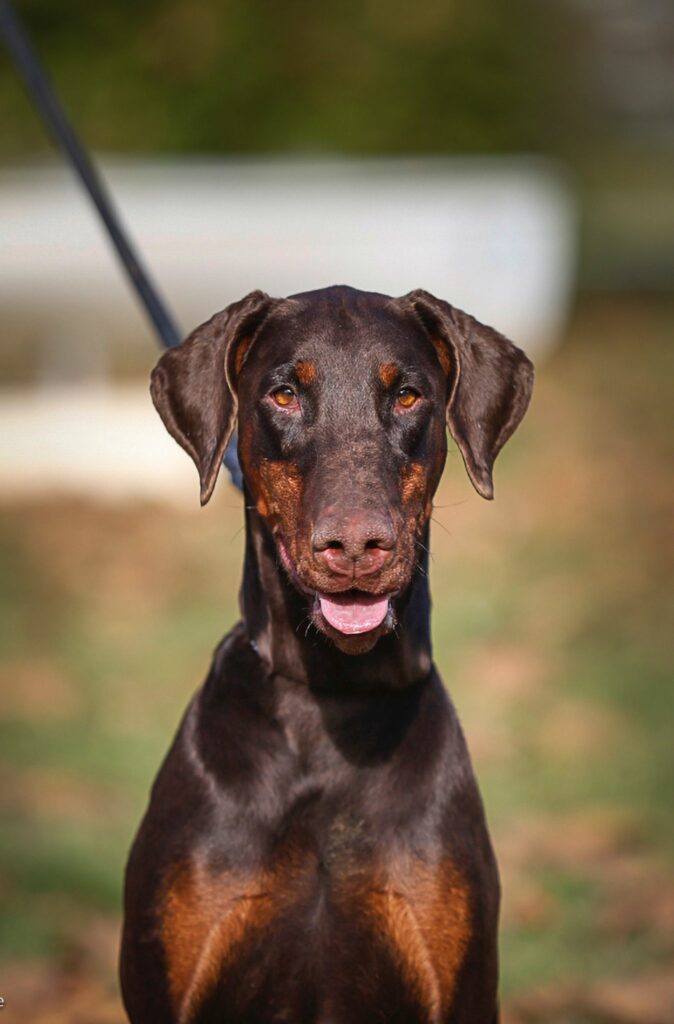
The Doberman Pinscher is a sleek, agile, and powerful dog standing 24 to 28 inches (61 to 71 cm) at the withers and weighing 60 to 100 pounds (27 to 45 kg). It has a short smooth coat, black, blue, fawn, or red in colour, with rust markings on the head, throat, chest, base of the tail, and feet. The breed has a reputation for fearlessness, alertness, loyalty, and intelligence.
Resembling a miniaturized version of the Doberman Pinscher is the Miniature Pinscher, a breed of toy dog originating in Germany and likely the result of crossbreeding German Pinschers, Dachshunds, and Italian Greyhounds. The name pinscher denotes any short-haired terrier-like breed.
During his time as a dog-catcher and pound keeper, Dobermann was thought to have crossed several breeds—including the Rottweiler, German Pinscher, Black and Tan Terriers, Weimaraner, and short-haired shepherds.
The Character
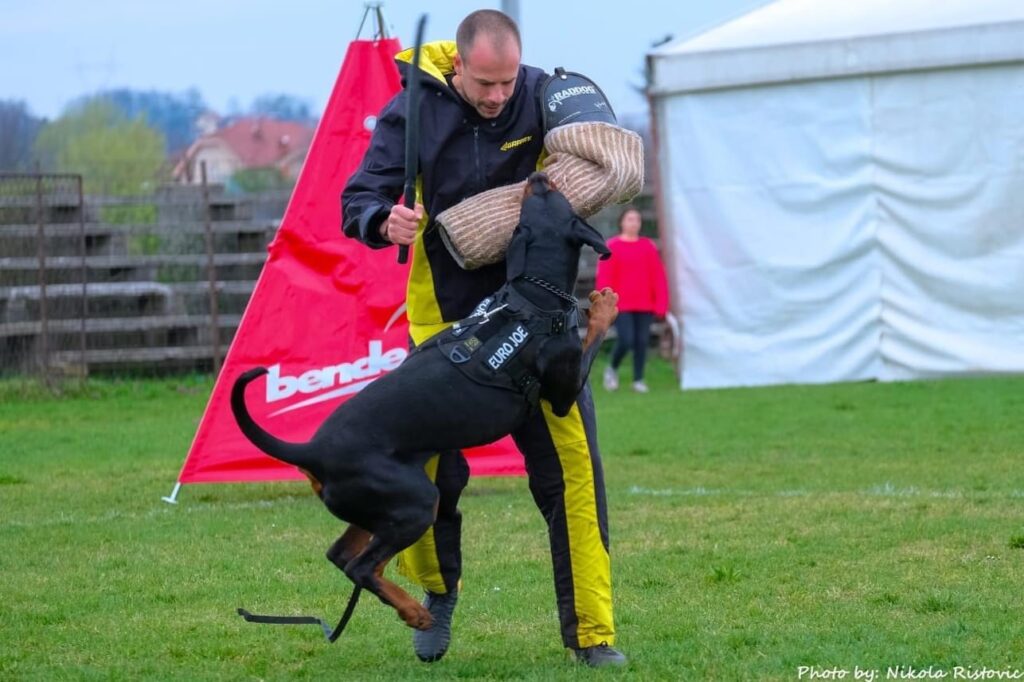
European Dobermans are known for their assertiveness. This makes them the top choice for police work and similar tasks. However, they are also very affectionate and devoted to their owner and family.
While they can be laid-back, they are not fans of sharing their space with other pets. Their protectiveness can sometimes lead to physical confrontations with others.
They don’t back down when their family is in danger and will bark or bite without hesitation. European Dobermans thrive with strong discipline, so make sure you train them. You can build their confidence through discipline, training, and leadership tasks.
One thing about these dogs is that they are attuned to human emotions, especially those of their owner. They will know when you are sad and will stay by your side.
Dobermans are not afraid of new environments and can be outgoing and lively. They have a strong prey drive, so going collar-free is not recommended. Without proper training, they may jump on strangers.
European breeders seek confident Dobermans with a strong work ethic. They excel in working events and are born for police and military work. If you are looking for a dog proficient in personal and property protection, European Dobermans are a suitable choice.
These dogs can quickly adapt to their role as guard dogs and will offer you protection.
Here are some qualities of a European Doberman:
• Devoted, brave, and watchful
• Affectionate and committed to their family
• Exceptional in police and military tasks
• Highly protective
• Aggressive
• Sensitive to human emotions
• Displays a strong instinct for chasing prey
• Courageous when encountering strangers
• Thrives on strong discipline
Dobermans and kids
Basically no matter why you decide to get a Doberman: as a family dog, service animal, guard dog, or faithful friend, it is up to you to make sure your pup is properly socialized and trained to be around others. If your intention is to add a Doberman into a household with kids, then extra precautions are a good idea. Teach your kids how to properly handle animals, how to behave around dogs, and other essentials like not to go by a dog when he is eating. Likewise, teach your dog about how to behave around kids, both of these steps are important to ensuring a safe and happy relationship between your children and pup.